Context:
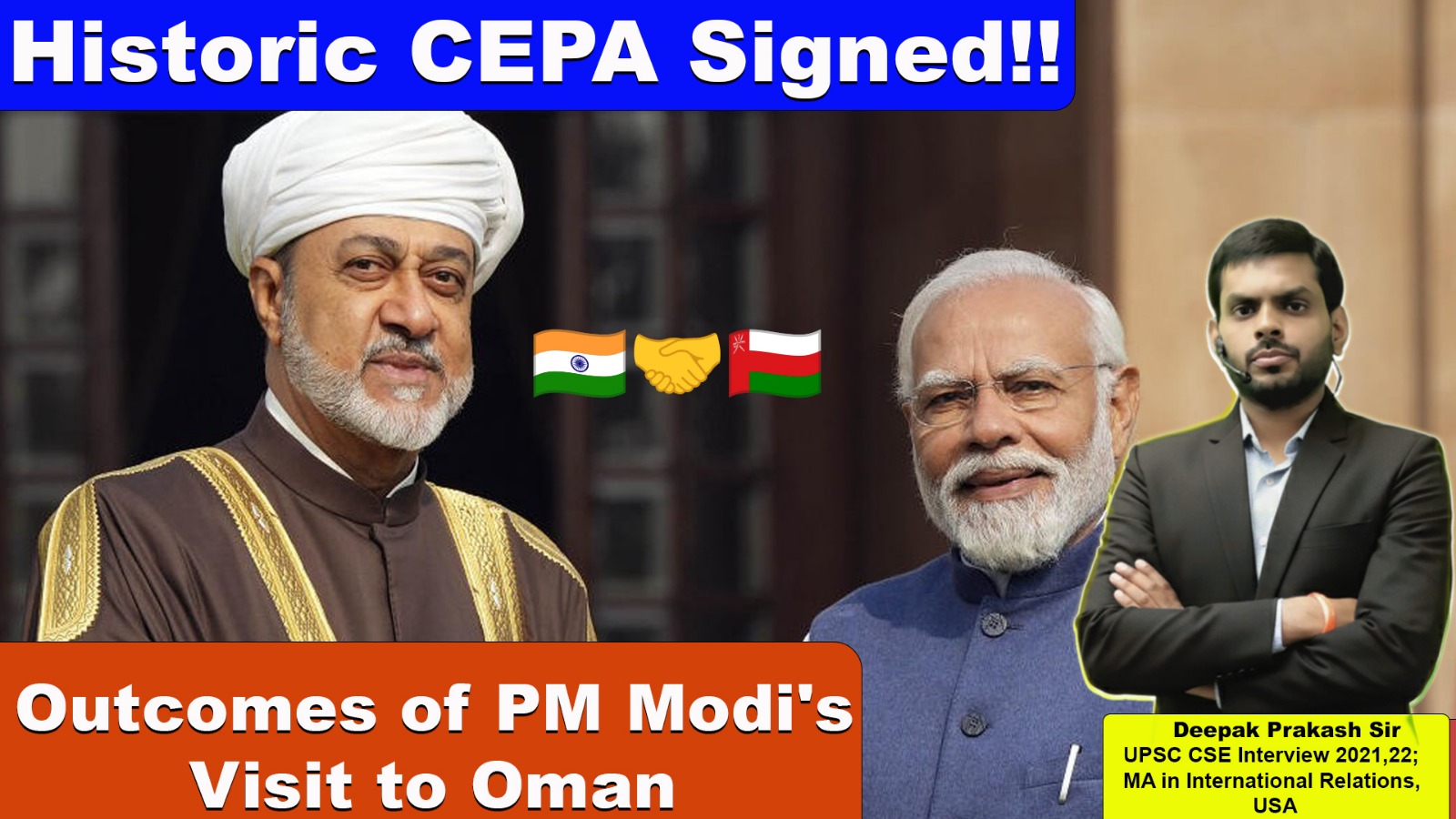
India & Oman signed a CEPA (Comprehensive Economic Partnership Agreement) under which Oman will provide India duty free access to 98.08% of its tariff lines covering 99.38% of India’s exports to Oman. This partnership is mutually beneficial as Oman is also going to reap benefits out of it.
Contents:
- Facts for Prelims
- Details of the Deal
India Oman trade relations
Implications - Enhanced mobility framework for Indian professionals
What is mode 4? - Way forward
- Questions for practice
Facts for prelims
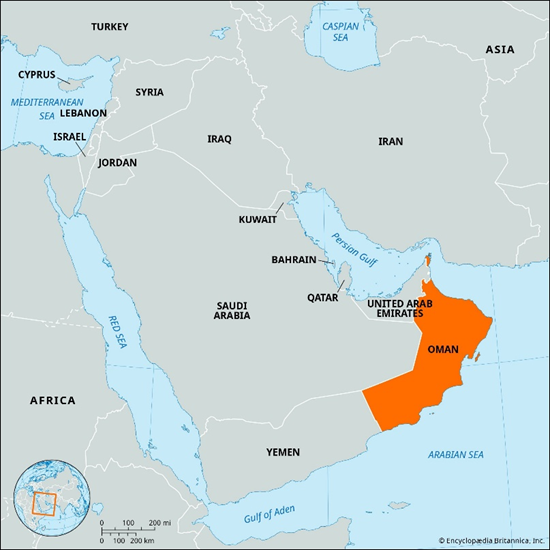
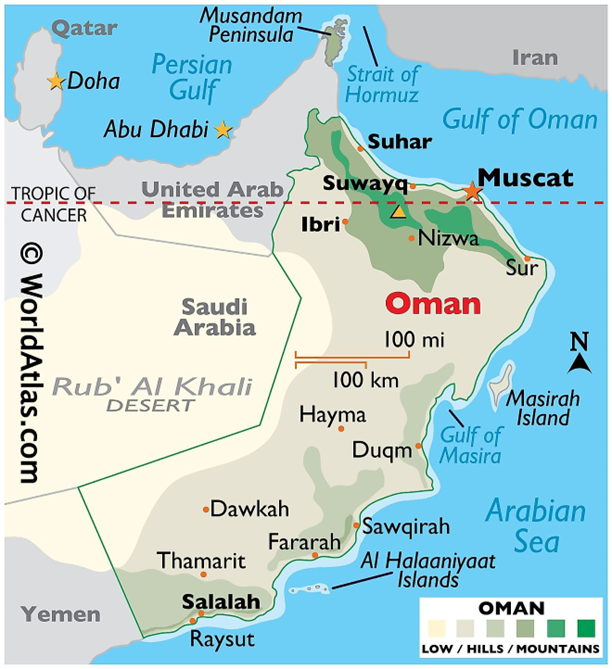
Location of Oman
Gulf Cooperation Council
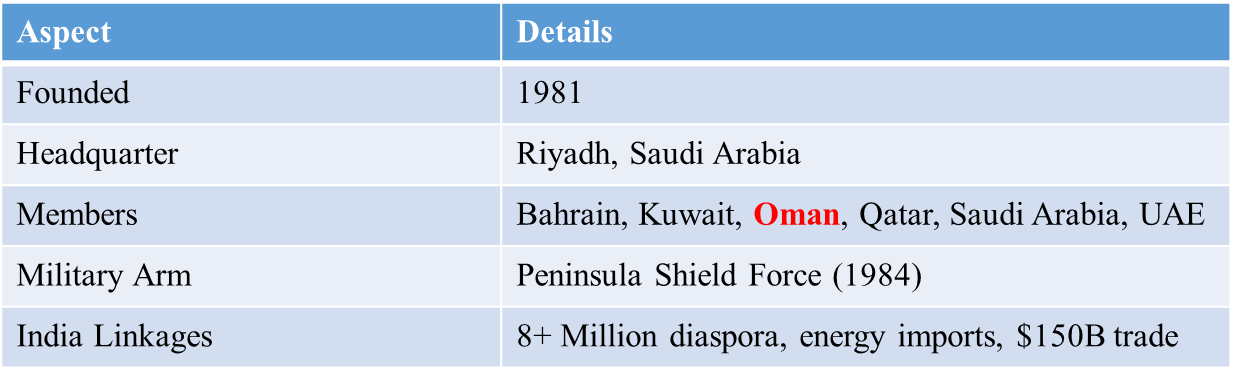
Note: India is not having any FTA with GCC but now India is having Trade deals with two members of the GCC (Oman & The UAE).
India Oman trade relations
Current Trade (FY25)
- Indian merchandise export to Oman – $4.06bn (makes up 0.93% of India’s total exports that FY).
- India imports from Oman – $6.54bn (makes up 0.91% of India’s total imports).
- Major Indian exports: Textiles, Leather, Footwear, Gems & Jewelry, Engineering goods.
- Major Omani exports: Oil & Gas, Petrochemicals, Dates & Marble.
CEPA Agreement 2025
- Duty free access: Oman will provide India duty free access to 98.08% of its Tariff lines, covering 99.38% of India’s exports to Oman.
- India has offered liberalised tariffs on 77.79% of its total tariff lines, covering 94.81% of what India imports from Oman.
- Labour-intensive sectors such as gems and jewellery, textiles, leather, footwear, sports goods, plastics, furniture, agricultural products, engineering products, pharmaceuticals, medical devices, and automobiles will receive full tariff elimination.
- Note: India has kept sensitive products like agricultural goods, Gold & Silver bullion out of the Agreement.
Benefits for India
- Boosts traditional industries (textiles, leather, gems).
- Expands market access for engineering goods and electronics.
- Strengthens India’s position as a major supplier to Oman.
- Enhances energy security through smoother oil & gas imports.
Benefits for Oman
- Greater access to Indian consumer market.
- Diversification beyond hydrocarbons.
- Attracts Indian investment in manufacturing, IT, and infrastructure.
- Strengthens food security through Indian agricultural exports.
Key Implications of CEPA with Oman
Key Implications of CEPA with Oman
- Trade Expansion: Duty free access will benefit many indian sectors.
- Economic Diversification
India: Expand export market, Support MSME, & Strengthens gulf economic persence.
Oman: Can diversify beyond Hydrocarbons. - Investment Mobility: Investment flow in manufacturing, IT + Faciliate labour mobility
- Strategic Implication
Oman-India’s 2nd CEPA partner in West Asia after UAE.
India’s energy security (Increase).
Positions Oman as a gateway to Africa & Europe via its strategic part. - Geopolitical Significance
Strengthens India’s West Asia outreach amid global energy transitions + Counters China’s growing influence in the gulf by deepening Indian-Oman ties.
Enhanced mobility framework for Indian professionals
- Workforce Quota Expansion:
Indian firms in Oman can now staff up to 50% of their employees with Indian nationals, compared to the earlier 20% limit. - Professional Mobility:
Protects and facilitates the movement of skilled professionals, engineers, IT experts, and healthcare workers. - A longer permitted duration of stay for Contractual Service Suppliers — extended from the existing 90 days to two years, with the possibility of a further two-year extension.
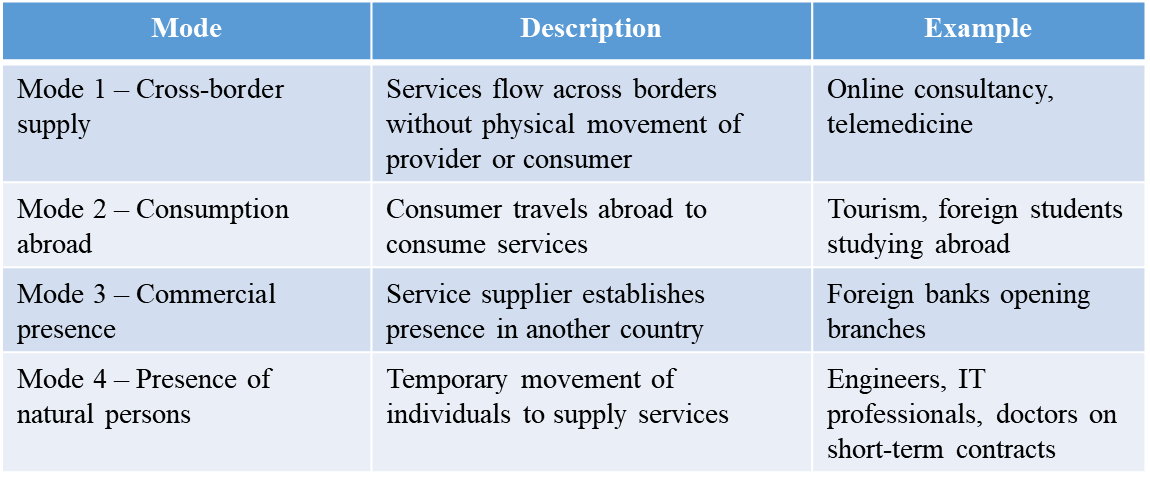
Mode 4
In trade law, Mode 4 under the WTO’s General Agreement on Trade in Services (GATS) refers to the temporary movement of natural persons across borders to supply services. It covers professionals, skilled workers, and intra-corporate transferees who travel abroad to deliver services, but it does not include permanent migration.
The 4 Modes of supply under GATS
Way forward
- Implementation Priorities
Like: Visa Simplification + Proper monitoring mechanism - Expansion
Can push for whole GCC + Can be expended to cover green energy, fintech & Higher education collab. - Integration with India’s broader Strategy
Link to skill India & NEP 2020 + Promote Diaspora diplomacy
Subscribe Our Youtube Channel: https://www.youtube.com/@CivilsPhodo/