Context:
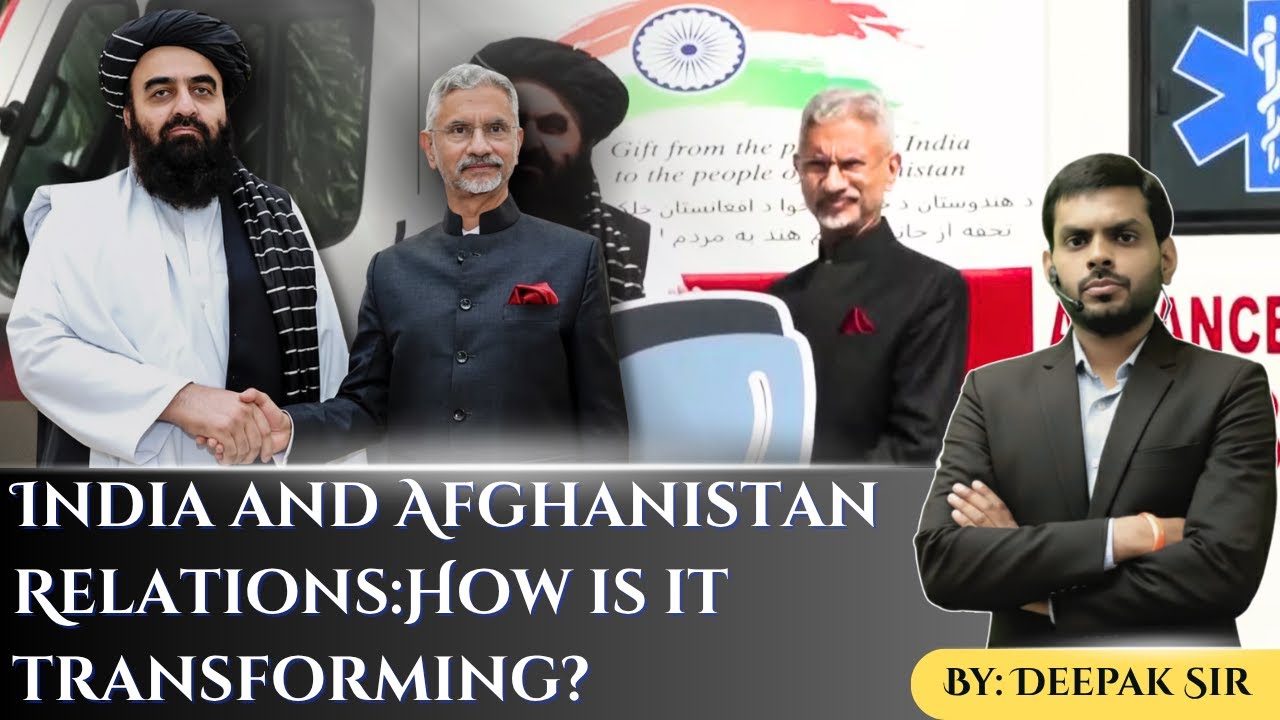
- The Taliban foreign minister of Afghanistan, Amir Khan Muttaqi, is in India on his first official visit, from October 09 to October 16.
- This is a crucial moment for India’s foreign policy as New Delhi engages with the Taliban.
- This visit is also significant in the light of the fact that since the Taliban captured Kabul in 2021, India has engaged with the Taliban in a gradual and incremental manner. Officials call it a case of ‘Cautious Engagement’.
Great games in Afghanistan (Important Stakeholders)
Strategic significance of Afghanistan:
- Afghanistan has been a place of great games.
- It is called as the Heart of Asia
- It is also called as Cockpit of South Asia
- Historian Arnold Taynbee called it as ‘Round about the World’
What Great Game?
Afghanistan has witnessed many great games:
- First, British versus Russian Empire
- Second, the USA and the USSR Empire
- Third, Present Great Game is more complicated because of many players including non-state actors: USA, Russia, China, Turkey, Iran, Pakistan and India. The present great game also involve many non-state actors like Tehreek-e-Taliban Pakistan, Al-Qaeda, Islamic state of Khorasan Province (ISKP), Haqqani Network etc.
Interests of various players in Current Great Game
| USA | Russia |
| Government in Afghanistan should be the one controlled by USA. Contain increasing influence of China, Russia in the region. | Islamic insurgency in Caucasian region has been a core concern of Russia. Russia has accorded diplomatic recognition to the Taliban & its bonds with Iran are strong. |
| Pakistan | China |
| Wants to gain strategic depth in Afghanistan (Don’t want to see India in Afghanistan). Want a government controlled by themWeak nerve is Durand Line | Aims to fill the vacuum left by the US withdrawal (Uses Moscow Format to deny strategic depth to US) Location of Afghanistan – Land bridge to C.Asia & ME. Deeply concerned about Uyghur militants from East Turkistan Islamic Movement (ETIM) operating in Afghanistan territory. |
India
Geostrategic importance:
- Preventing Afghanistan from becoming a safe haven for anti-border terror groups
- To ensure no use of Afghan soil for cross-border militancy
Geopolitical Importance:
- Balance of Power (Primarily China & Pakistan want to deny access to India in the region
- Maintain strategic presence in Heart of Asia
Geo-Economic:
- Access to Central Asia (Mineral oil, Connectivity Market, Investment)
- Afghan’s $1 trillion mineral wealth – including Lithium, Copper & Rare Earth – Vitals for India’s energy & tech sectors.
- India’s investment in Afghanistan – > $36 billion in Roads + Dams + Schools & the Parliament building.
Timeline of India’s engagement since 2021
India’s engagement with Taliban is a case of cautious engagement.
- August 31, 2021: Hours after the last US Military aircraft flew out of Kabul, India made it’s first official contact with the Taliban.
- September 2021: Official acknowledgement of Taliban as ‘Those is positions of power and authority across Afghanistan’.
- December 2021: First humanitarian aid (Doval’s approach i.e. approach of India should be guided by it’s special relationship with the Afghan people).
- June 2022: First official Indian visit to Kabul and taking an incremental step the Indian government sent a ‘Technical team to Kabul which has been stationed at the embassy since then’.
India’s engagement with Taliban is a case of cautious engagement.
- January 2024: Muttaqi held a meeting of diplomats from 11 neighboring countries including India and proposed establishing a ‘Regions centric narrative aimed at developing regional cooperation for a positive and constructive engagement between Afghanistan and regional countries’.
- January 2025: Foreign secretary Vikram Misri flew to Dubai.
- May 2025: Telephonic conversation between S. Jaishankar and Muttaqi. (The Kabul regime had condemned the Pahalgam terror attack).
- October 2025: Talibani foreign minister is in India and now India has decided to upgrade India’s technical mission in Kabul to the status of embassy of India.
Why is India engaging with Taliban?
Taliban since 2022 has consistently maintained that while the US role had been for their selfish reason, India had been very generous, keeping in minds the needs of the Afghan people.
Reasons behind engagement:
- Change in global situation
- Pakistan: Initially, Taliban’s ally but has turned into an adversary now. With thousands of Afghan refugees being sent back by Pakistan’s establishment, India has offered assistance.
- Iran: Weakening of Iran
- Russia: Fighting its own war
- USA: Behaving differently under Donald Trump 2.O.
- The China Factor: China is making inroads in Afghanistan by exchanging ambassadors with the Taliban (India does not want to loose that strategic space).
- India’s own assessment: Believes that if fails to engage now, India to lose out on years of investment in Afghanistan as well as strategic space.
- Taliban’s acceptance inside Afghanistan: There is a difference between Taliban’s last stint in power and this time is that within the country, the group faces no strong political opposition.
Reasons behind Pakistan – Afghanistan Tensions
In the second week of October, there were clashes which saw Afghanistan claim 58 Pakistani soldiers killed, while Pakistan reported killing over 200 Taliban fighters.
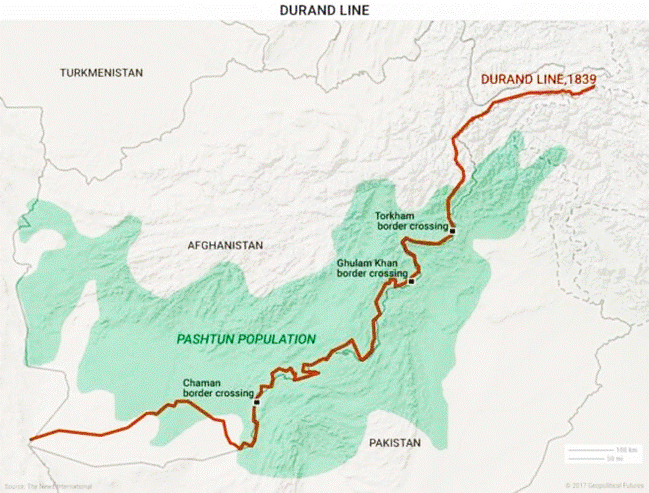
Reasons behind Pakistan – Afghanistan Tensions
Historical reason: Durand Line Dispute
- Not recognized by Afghanistan as an official border
- Pashtuns in Pak. & on sides of Afghanistan – don’t accept Durand Line
Taliban-TTP Nexus
- The TTP (Orthodox Deobandi school of thought) ® Wants Pakistan to be run by emirate based on a strict interpretation of Islamic law (Wishes to overthrow current government)
- Taliban regime denies direct support but shares ideological & tribal ties with TTP fighters.
Cross border militancy and retaliation
Both sides conducted retaliatory strikes across the border
- Afghanistan claim (58 Pak. Soldiers killed)
- Pak->200 Taliban fighters killed
Shifting alliances and diplomatic isolation
- Afghanistan’s outreach to India & refusal to accommodate US or Pakistani mining interests ® exacerbated tensions
Border management
- Frequent closures of border crossings like spin Boldak & Chaman disrupt trade & fuel resentment.
Outcomes of Muttaqi visits to India
- Diplomatic reset: First ministerial level contact between India & the Taliban regime since August 2021.
- Strategic Dialogue: Focus on Regional Security + Counter terrorism & stability in S. Asia
- Economic and trade cooperation: Jaishankar spelt out the areas, stretching from food to health to training & education, where India would cooperate with Afghan people, reopening of trade routes via Wagah border.
- Humanitarian and medical support: Jaishankar spelt out the areas stretching from food to health to training & education – where India would support Afghanistan. Medical checkup provided to Muttaqi.
- VISA and people to people engagement: Committed to expanding Visa access for Afghan studencts + Patients & businesspersons
- Reopening of India embassy in Kabul: Announced the upgrade of its technical mission to a full-fledged embassy in Kabul.
Way forward for India and Afghanistan relations
- Vivek Katju: In his article ‘With new Great Game, India must engage with the Taliban and Kabul’ (11th Oct. 2025) argues that India’s Afghanistan approaches have to be framed within a changing environment in its Western neighborhood.
- The US has decided that Pakistan should play a major role in India’s immediate and extended western neighborhood.
- China is also expanding its influence in this area. Its ties with Pakistan remain ironclad, its influence in Iran and in the Arabian Peninsula has expanded.
- Russia has accorded diplomatic recognition to the Taliban and its bonds with Iran are strong.
- It is in this setting that India has to safeguard its interests to its west in the backdrop of Pakistan’s implacable enmity.
- According to Katju, a firm presence in Afghanistan is key to ensuring that its successfully manages any negative impact emanating from great power geopolitics in its western neighborhood.
Way Forward
Pragmatic engagement without formal recognition
- Vivek Katju + Shantie Mariet D’Souza
- Continue engaging with the Taliban regime through diplomatic channels
Revive development projects
- Resume stalled infra. projects like Salma Dam, Zaranj Delaram Highway + Go for new investments in mining + RE + Agriculture
Humanitarian outreach
- Expand scholarships + Medical visas + Support NGOs in fields like Health, Education.
Security cooperation
- Not allow Afghan soil to be used for anti-India terror groups + Intelligence sharing to counter radicalization
Regional connectivity and trade
- Strengthen links via Chabahar Port & INSTC
- Push for reopening of Wagah – Torkham – Kabul Trade Corridor
Multi-lateral diplomacy
- Work with UN, SCO & Other multilateral forums to ensure Afghanistan’s integration into regional frameworks.
Practice questions for PSIR Optional and GS II Mains 2026
Q1. Discuss the evolving contours of India – Afghanistan relations in the post 2021 Taliban regime contexts. How can India balance strategic interests with ethical imperatives in its engagement with Afghanistan?
Q2. India has historically prioritized people to people ties with Afghanistan. How can humanitarian diplomacy be leveraged to rebuild trust and influence?
Q3. Analyze the impact of the Afghanistan – Pakistan conflict on India’s security calculus. How should India recalibrate its regional strategy?
Subscribe Our Youtube Channel : https://www.youtube.com/@CivilsPhodo