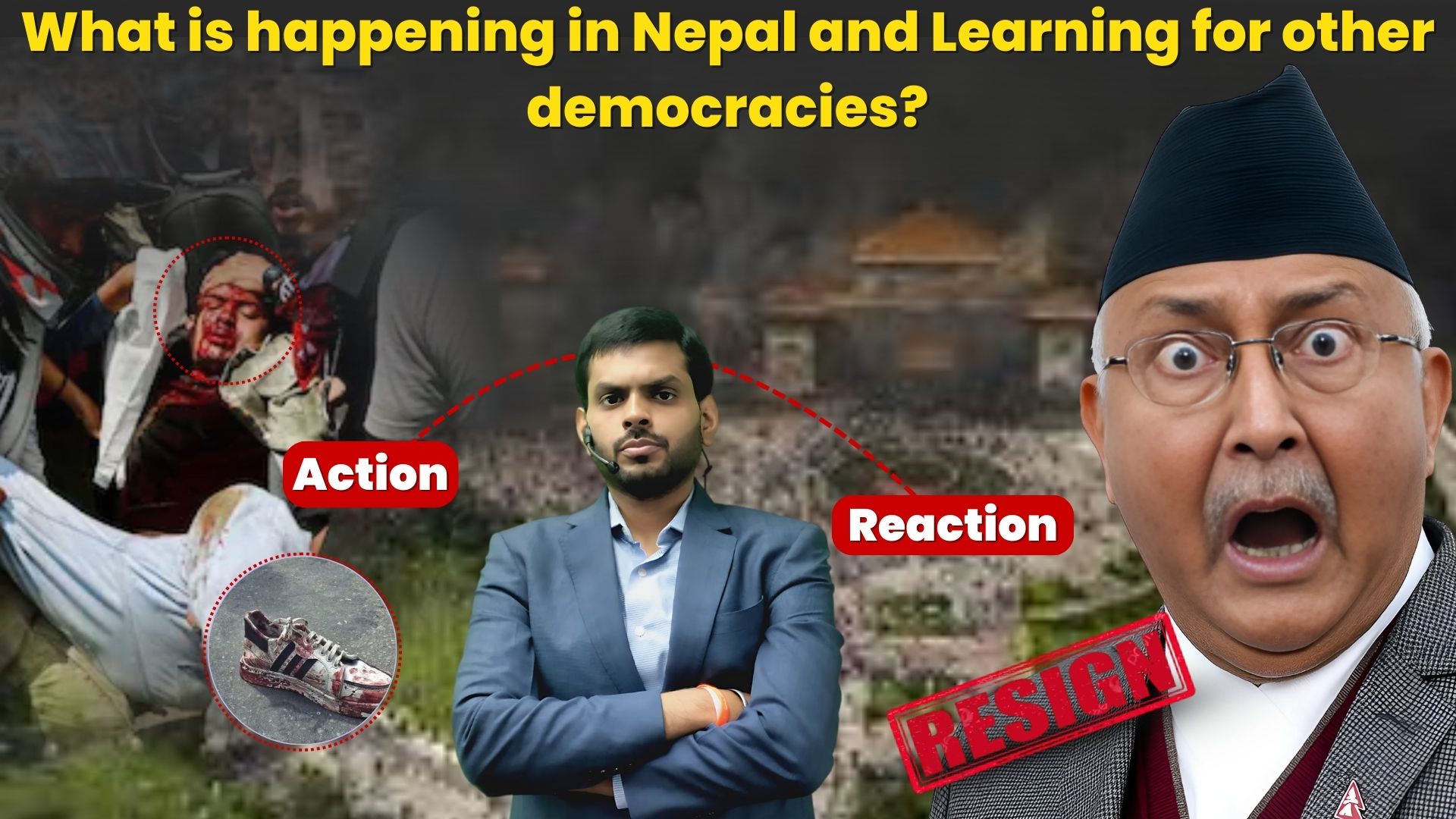
Nepal, a nation that has seen repeated cycles of political instability, is once again in turmoil. The resignation of Prime Minister K. P. Sharma Oli in September 2025 is not just another episode in the country’s long history of unstable governments. Instead, it signals a generational uprising, one where young voices, long ignored, have now erupted in fury on the streets. This upheaval, popularly known as the Gen Z protests, marks the first time Nepal’s youth have mobilized at such scale.
While the immediate trigger was a government ban on 26 social media platforms, the deeper causes are woven into years of corruption, unemployment, and political apathy. In many ways, the Nepal crisis of 2025 is not merely about Oli’s fall — it is about a generation that has lost patience with broken promises and elite-driven governance.
Who Are the Protesters? Gen Z at the Forefront
The protests have been dominated by Generation Z — citizens born between 1997 and 2012. This cohort, often called Zoomers or the iGeneration, has grown up with smartphones, social media, and high-speed internet as daily companions. Unlike previous generations that accepted political inefficiency, Gen Z has higher expectations from governance.
Anger began building online months earlier when Facebook pages like Next Generation Nepal started highlighting rampant corruption. The posts quickly gained traction among youth, who shared stories of nepotism and targeted the extravagant lifestyles of politicians’ children, giving rise to slogans against “Nepo Babies” and “Nepo Kids.”
For a country where nearly 41% of the population is under 40, this digital movement soon spilled onto the streets.
Chronology of Events
- Early 2025: Youth-led online movements began questioning Nepal’s political leadership.
- September 4, 2025: The Oli government abruptly banned 26 social media platforms, calling it a move to maintain order. For the youth, this was an attack on their only democratic space.
- September 5 onward: Protests spread across Kathmandu Valley and other cities.
- Escalation: The police crackdown resulted in violent retaliation. Protesters attacked state institutions and even targeted senior leaders’ residences.
- Outcome: Oli resigned, leaving the country in political uncertainty.
This sequence reflects how digital censorship transformed simmering frustration into outright rebellion.
Causes Behind the Upheaval
1. Immediate Trigger – Social Media Ban
The social media ban was viewed as digital censorship in a country where young citizens rely heavily on online platforms for expression. The attempt to silence dissent only magnified it.
2. Generational Disillusionment
- Youth unemployment stands at over 22%.
- Widespread corruption and nepotism limit opportunities.
- Political leaders are seen as detached and unaccountable.
3. Structural Political Instability
Since 2008, Nepal has witnessed 14 different governments. Leadership changes have been frequent, but reforms minimal. The cycle has left the younger generation with little faith in the political class.
4. Economic Fragility
- The economy is heavily dependent on remittances.
- There is little diversification, leading to limited job creation.
- Elite extravagance, especially by political families, has deepened resentment.
5. Violent Escalation and Institutional Collapse
The deaths of 19 protesters during clashes further provoked the crowds. Trust in democratic institutions collapsed as the government relied on brute force instead of dialogue.
6. Role of the Deep State
There are suspicions of foreign involvement. Intelligence reports suggest that regional powers like China and global powers like the USA may be maneuvering events to secure influence. Some even claim a CIA-backed regime change, aimed at countering China’s growing footprint in Nepal.
Targets of Rage
Initially, protests were planned as peaceful rallies. But after heavy police action, anger spilled over violently:
- Residences of five former Prime Ministers — Oli, Prachanda, Madhav Kumar Nepal, Jhalanath Khanal, and Sher Bahadur Deuba — were burnt or vandalized.
- Rajya Laxmi Chitrakar, wife of Jhalanath Khanal, was tragically burnt alive.
- The Finance Minister was stripped and paraded in public humiliation.
- The Nakkhu Central Jail in Lalitpur, Kathmandu Valley, was set ablaze.
These incidents reflect the scale of public anger, not just at Oli but at the entire political class.
Current Political Scenario in Nepal
With Oli’s resignation, Nepal faces a political vacuum. The entire system stands delegitimized, as protesters targeted nearly all senior leaders. Potential successors include:
- Sushila Karki – Former Chief Justice of Nepal
- Kalyan Shrestha – Former Chief Justice of Nepal
- Balen Shah – Mayor of Kathmandu, a popular youth leader
- The Army – considered a potential facilitator if civilian politics fail
This uncertainty raises serious questions about the future of Nepal’s constitution and whether democratic processes can be restored without major reforms.
Comparisons: Nepal, Bangladesh, and Sri Lanka
Nepal’s protests are part of a larger South Asian trend where youth dissatisfaction has fueled political upheaval.
- Bangladesh (2024): Student protests against job quotas snowballed into mass opposition to Sheikh Hasina’s regime.
- Sri Lanka (2022): An economic collapse led to the Aragalaya movement, forcing the Rajapaksas to resign.
- Nepal (2025): Gen Z has become the driving force, protesting against nepotism, unemployment, and failed governance.
Demographic Drivers
- Nepal: 16–40 age group makes up 40.68% of the population.
- Bangladesh: 15–29 age group makes up 25%.
- Sri Lanka: 15–29 age group makes up 23.6%.
Clearly, youth discontent is shaping politics across the region.
Role of the Deep State
Debate continues over whether Nepal’s protests were purely organic or partly orchestrated.
- Organic view: The protests reflect genuine frustration with corruption, unemployment, and censorship.
- Scripted view: Similarities with Sri Lanka and Bangladesh fuel suspicions of covert influence.
In Nepal’s case, the “Deep State” refers to domestic and foreign networks that shape politics behind the scenes. Narratives of U.S. involvement — to counter China’s growing influence — have gained traction, though not independently verified.
India’s Role in Nepal’s Crisis
For India, Nepal’s crisis is not distant politics — it is a strategic challenge. The two countries share an open and porous border, meaning instability can spill over quickly.
Scholar Amitabh Matoo outlines steps India must consider:
- Listen to the youth – Engage directly with Nepal’s younger voices.
- Support governance reforms discreetly – Avoid overt interference that could backfire.
- Prepare for uncertainty – Political volatility in Kathmandu is unlikely to end soon.
- Exercise strategic patience – Rushed actions may worsen the situation.
India’s role is therefore one of cautious support, balancing its strategic interests with Nepal’s sovereignty.
Conclusion
The Nepal Crisis 2025 is more than just another chapter in the country’s history of unstable governments. It is a generational awakening, driven by Gen Z’s refusal to tolerate corruption, nepotism, and repeated failures of governance.
The tragic violence, the humiliation of leaders, and the collapse of political order reflect a system that has lost legitimacy. Yet within this crisis lies an opportunity — to rebuild Nepal on the principles of accountability, inclusivity, and responsiveness to its youth.
For India and South Asia, the lesson is clear, ignoring the frustrations of young citizens is no longer an option. Gen Z has arrived on the political stage — and they are determined to reshape the future.
Subscribe Our Channel : https://www.youtube.com/@CivilsPhodo/