
Introduction
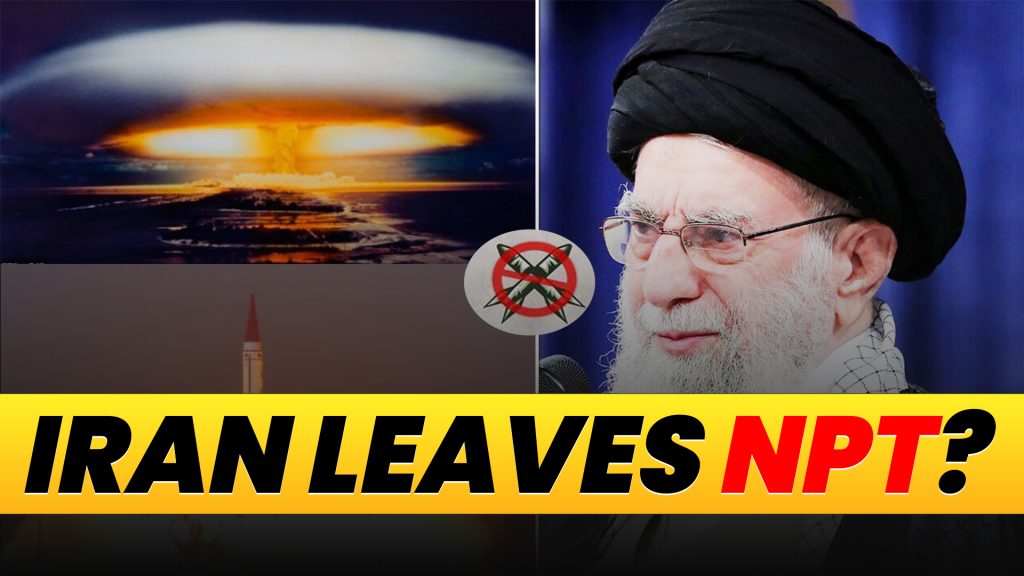
In a move that has sent shockwaves through the international community, Iran leaves NPT—marking a potential game-changer in global nuclear diplomacy. The Nuclear Non-Proliferation Treaty (NPT), a cornerstone of nuclear disarmament efforts for decades, has now lost one of its most scrutinized signatories. As tensions rise in the Middle East and global powers react, Iran’s decision raises critical questions about regional security, non-proliferation goals, and the future of international agreements. What led to this dramatic shift, and what could it mean for the world? Let’s unpack the full implications.
Context
- In the middle of heightened military tensions between Iran & Israel, the Iranian government is mulling to leave NPT.
- Citing Article 10 of the treaty, Iran may legallyexitbyclaiming its supreme interest are at risk.
- North Korea was the last country to leave NPT.
Content
- What is NPT?
- Pillars of NPT
- Significance of NPT
- India’s stance on NPT
- Process of exiting NPT
- What is prompting Iran’s potential withdrawal?
- Regional and Global implications
- Way Forward
What is NPT?
- The NPT is an international treaty signed in 1968 andcameintoforcein 1970.
- NPT has almost universal membership which means global consensusisin favor of NPT.
- Today, 191 states have joined the treaty and only followingcountriesareout of NPT-
- a) India
- b) Pakistan
- c) Israel
- d) South Sudan
- e) North Korea
Pillars of NPT
- NPT is based on three pillars:
- Non-Proliferation
- Disarmament
- Peaceful use of nuclear energy
History of Iran joining NPT
- Iran signed the NPT in 1968 & ratified it in 1970.
- As a non nuclear weapon state, it is legally prohibitedfromdevelopingoracquiring nuclear weapons.
- In return, Iran is entitled to access peaceful nuclear technologysubjecttoInternational Atomic Energy Agency (IAEA) inspections.
Significance of NPT
- The aim of NPT is to prevent the spread of nuclear weaponsandweapons technology.
- Consequently, it establishes a safeguards systemundertheresponsibility of IAEA.
- Safeguards are used to verify compliance withthetreatythroughinspections conducted by the IAEA.
- The treaty defines nuclear weapon states as those that havebuiltandtested a nuclear explosive device before January 01, 1967.
- These are the US, Russia, the UK, France and China.
India’s opposition to NPT
- NPT is a brainchild of the USA. The prime opposition to NPT comes from
- a) India
- b) Disarmament lobby
What are India’s objections?
- No concrete commitment towards nuclear disarmament
- P5 stance not encouraging
- Creates the world of haves and have nots
- Doesn’t stop vertical proliferation
Process of exiting NPT
- Article 10 allows any party to withdraw fromthe treatyif it determinesthat “extraordinary events…have jeopardized the supremeinterestofitscountry”.
- A 3 months notice must be given to all other treatymembersandtheUN Security Council.
- Since the treaty’s inception, only one country- NorthKorea-hasexercised this right, announcing its withdrawal in 2003.
- It went on to tests its first nuclear device in 2006.
What is prompting Iran’s potential withdrawal?
- IAEA’s 35 member Board of Governors resolution
- Military Strike by Israel
Regional and Global Implications
- No longer accepts the treaty’s obligations including IAEA inspections and transparency measures
- Would be free to pursue a nuclear weapons Programme
- Iran’s nuclear facilities would no longer be subject to the IAEA’s safeguards agreement
- Impact the treaty’s legitimacy
- Water shed moment forglobal non proliferation
Conclusion
Iran’s exit from the NPT marks a serious shift in global nuclear dynamics, raising concerns over regional stability and the future of nuclear non-proliferation efforts. The world now watches closely as the next chapter unfolds.
Join Our Telegram Channel: UPSC With Deepak Prakash